



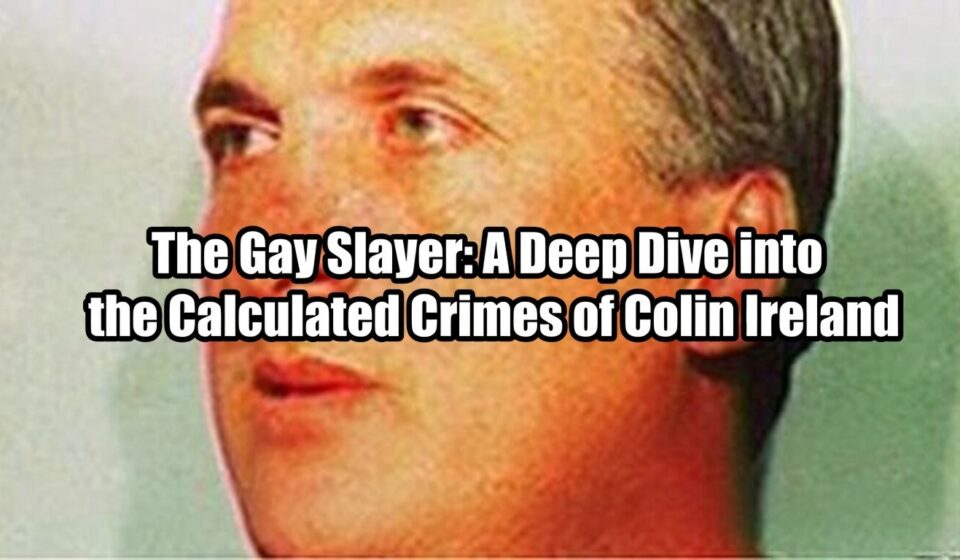

In the annals of British true crime, some killers are driven by sudden, chaotic rages or deep-seated, uncontrollable compulsions. Then there was Colin Ireland.
In 1993, Ireland did not just embark on a murder spree; he executed a cold, calculated, and highly deliberate New Year’s resolution. Dubbed The Gay Slayer by the British press, Ireland’s methodology, psychological profile, and meticulous planning make him one of the most chillingly pragmatic serial killers in UK history.
Here is a deep dive into the man, his methods, and the brief but terrifying reign of terror that gripped London’s gay community over three decades ago.
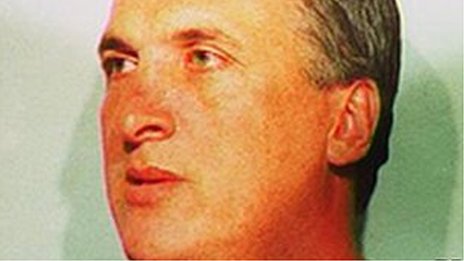
To understand Colin Ireland’s crimes, one must understand his motivation which was entirely devoid of passion. Born in 1954 in Kent, Ireland spent much of his early life drifting through petty crime, unstable relationships, and financial failure. By his late 30s, he was twice-divorced, unemployed, and living in a homeless hostel.
Ireland felt like a non-entity. He craved notoriety, respect, and a legacy, albeit a dark one. As 1993 approached, he made a definitive, monstrous decision: he would become a serial killer to achieve fame.
He didn’t choose his victims out of deep-seated homophobia, nor was he acting on repressed desires. Instead, Ireland who identified as heterosexual chose London’s gay community for purely tactical, predatory reasons. He believed (wrongly, as history would show) that the police would be less diligent in investigating the deaths of gay men, and he knew that the sadomasochistic (S&M) scene would allow him a pretext to bind his victims without raising immediate alarm.
He would frequent visit The Coleherne, a well-known leather and S&M pub in Earl’s Court, London. Dressed in leather to blend in, he would seek out affluent, middle-aged gay men who practised bondage.
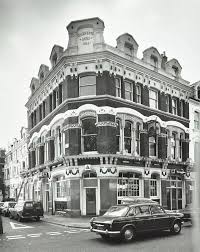
Once he successfully cruised a target, he would accompany them back to their flats. There, under the guise of an S&M “master and servant” roleplay game, Ireland would convince the men to let him bind their hands and feet.
The moment his victims were entirely helpless, the game ended. Ireland’s demeanour would instantly shift from consensual partner to cold executioner.
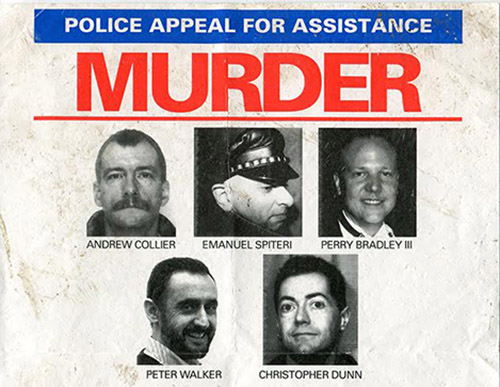
Between March and August 1993, Ireland claimed five lives.
- Peter Walker (45) – March 1993, Earl’s Court
- Christopher Dunn (37) – May 1993, Wealdstone
- Perry Bradley III (35) – June 1993, Kensington
- Andrew Collier (33) – June 1993, Dalston
- Emanuel Spiteri (25) – August 1993, Catford
What truly separates Ireland from many other serial killers was his absolute obsession with controlling the narrative. He didn’t want his crimes to be mistaken for isolated incidents or accidental deaths during rough sex. He wanted the world to know a serial killer was at work.
After killing Andrew Collier, Ireland actually called the police and The Sun newspaper. He famously asked:
”How many do I have to kill before I am a serial killer?”
He cleaned up his crime scenes meticulously, wiping down fingerprints, spraying surfaces to destroy DNA evidence, and even staying in the victims’ homes for hours sometimes sleeping in their beds or eating their food to ensure he hadn’t left anything behind.
Despite his meticulous planning, Ireland’s undoing came from a combination of his own arrogance and modern technology.
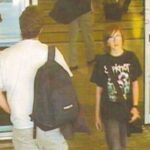
During his final murder of Emanuel Spiteri, security cameras caught Ireland and Spiteri together at Charing Cross railway station. When the police released the CCTV footage to the public, a sharp-eyed acquaintance recognised Ireland.
Furthermore, despite his careful cleanup at Spiteri’s flat, forensic teams found a single, microscopic fibre on the window ledge that matched a jumper found in Ireland’s possession.
On 20 August 1993, Colin Ireland was arrested.
Upon his arrest, Ireland surprised detectives by immediately confessing to all five murders in staggering, clinical detail. He showed zero remorse, treating the interviews almost like a business debrief.
In December 1993, Ireland pleaded guilty and was sentenced to five life sentences. He would spend the rest of his days behind bars, eventually dying of natural causes (pulmonary fibrosis) at HMP Wakefield in 2012 at the age of 57.
What are your thoughts on the Colin Ireland case? Do you think modern forensic policing would have caught him after his very first crime today? Let us know in the comments below, and don’t forget to subscribe for more deep dives into Britain’s darkest true crime archives.
